Online Research Academy (High School)
NC State GTI’s Online Research Academy is a 6-week, fully virtual program in which high school students (rising 10th grade and above) complete a mentored, college-level research project under the direct supervision of NC State faculty. This intensive, virtual program transforms high school students into researchers. You won’t just learn theory; you’ll immediately apply fundamental research methodologies to complete a dedicated, college-level research project. Gain the confidence, skills, and experience you need to stand out in the competitive world of college admissions.
Engage your passion and collaborate with a top-tier research faculty mentor. This program is designed to build your portfolio and prepare you for university-level academics.
- Interdisciplinary Focus: Choose from diverse project topics across many disciplines, applying your classroom knowledge to current real-world problems.
- Direct Faculty Mentorship: Collaborate closely with a university faculty member during regular online meetings, building a professional relationship and receiving personalized feedback on your project.
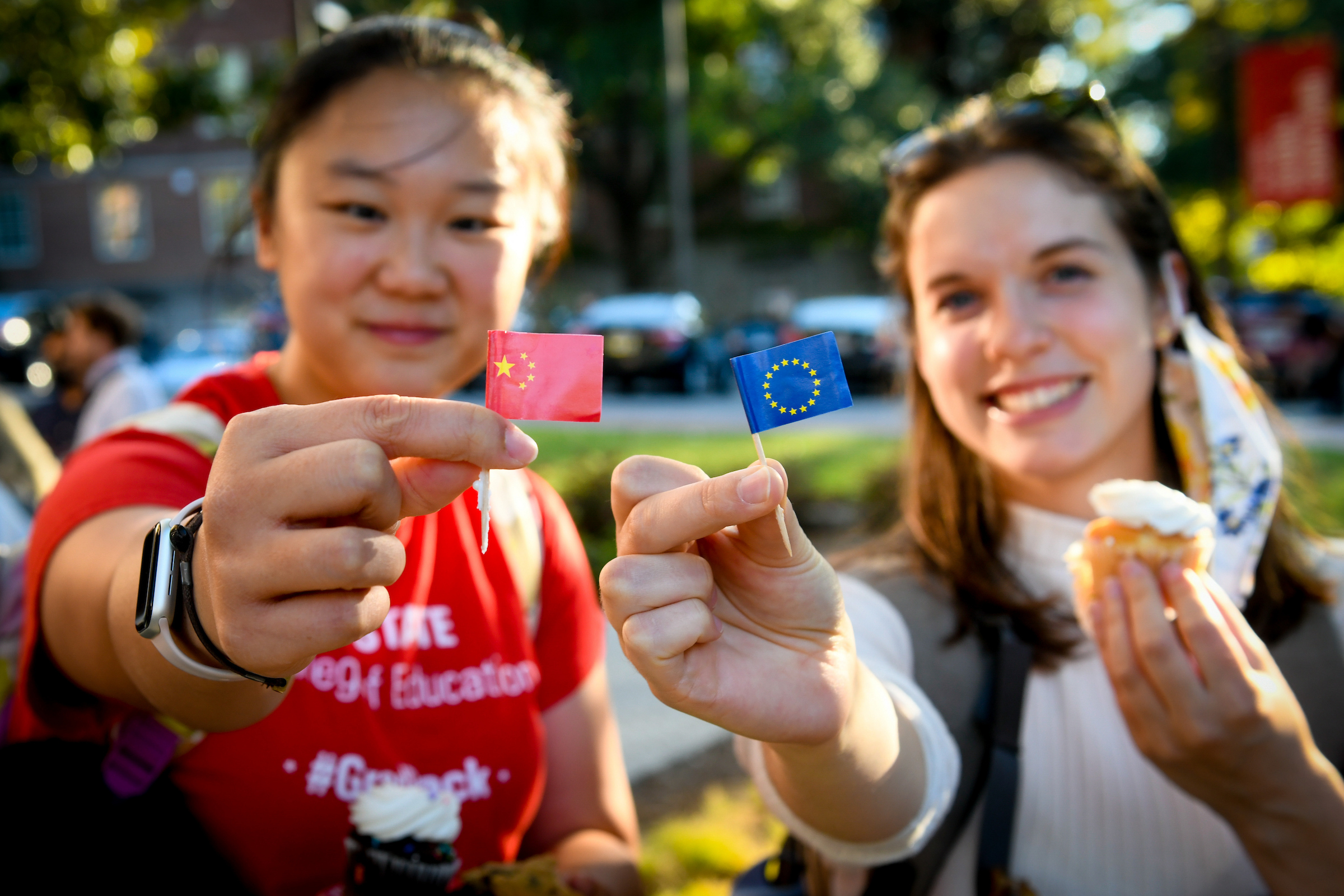
- Global Collaboration: Develop cross-cultural skills and understanding working in small teams with students from around the world
- College Application Edge: Receive a GTI program certificate and evaluation letter from your professor.
- Master Real-World Skills: Learn to design, execute, and present a substantial research project.
If you have additional questions, please email [email protected]
“We had many scholarly discussions about engineering and physics topics, which were very engaging and helpful in preparing for seminar-style college classes.”
G.A.
High school sophomore, USA
Winter 2027 Info Sessions
Join our Pre-College Programs webinar for a live Q&A on:
Oct 7, 12 pm Eastern Time
Oct 15, 5 pm Eastern Time
What Projects are Available for Winter 2027?
Students can select the research topics that align most closely with their personal interests.
Full project details coming soon!
Winter projects will include:
Global Generosity: Quantitative Models and International Giving Trends
- For students interested in finance, data analysis, non-profit & philanthropy, human behavior
Repurposing Energy Infrastructure for Second-Life Use
- For students interested in Environmental Engineering, Electrical Engineering, solar energy, and sustainability
Genetics: Genomic Prospecting and In Silico Metabolic Modeling for Sustainable Bioremediation
- For students interested in biology, bioinformatics, environmental science, energy, or sustainable technologies
Healthcare and AI: Artificial Intelligence Driven Gait Monitoring for Early Mobility Risk Indicators in Healthcare Applications
- For students interested in AI/data science, health tech, or biomedical engineering
AI for Finance: Agentic Stock Trading Leveraging Exploratory Data Analysis, Model Building, Training, and Implementation
- For students interested in data science, finance, investing, and AI applications
Making Airplanes Lighter and Stronger through AI-Powered Structure Design
- For students interested in Aerospace Engineering, Mechanical Engineering, other Engineering and Science fields
Autonomous Robot Navigation: Simulation and Algorithm Design for Intelligent Mobility
- For students interested in Robotics, Mechanical Engineering, Electrical Engineering and Computer Science
Can We Trust AI With Our Money? Financial Decision-Making, Risk Assessment, and Responsible AI
- For students interested in business AI, data analytics, finance, economics, and risk assessment
AI in Marketing, Branding, and Strategic Communication: Effective Uses for Customer Engagement
- For students interested in marketing, management, branding, strategic communication, psychology and health, general business, AI and social media
Animal Science TBD
More Projects to Come! Please check the website in early October.
Faculty Intro Videos
Congratulations to the 2026 Summer Final Project Winners:
AI for Finance: Aakarsh K.
AI in Healthcare: Aadi B.
Autonomous Robot Navigation: Sage F.
Making Airplanes Lighter and Stronger: Ruohan W. and Roy E.
From Fiber to Fabric: Jiarui L.
Financial Derivatives Pricing: Petr I.
Genomic Prospecting: Liam M., Akshu, Alexandra C., Hannah M.
AI Venture Lab: Nirav N.
Digital Marketing: Diya M., Fu Z., Leqi G., Adeline S., Andrew Z.
Visualization in Engineering: Soham S.
How Do I Apply?
Students are expected to spend 5-10 hours a week on their research projects. You will receive an NC State University program certificate and an evaluation letter from the faculty upon the successful completion of the program.
Application Requirements
- Currently enrolled in high school (rising grade 10 or higher by summer 2026)
- English Proficiency Requirement: All international students from non-English-speaking countries must meet minimum score requirements.
- TOEFL IBT 75
- IELTS 6.0
- Duolingo 95
- Scholarship Application: A limited number of partial scholarships are available. Please upload the required essay when you submit your application to be considered.
Application Process and Timeline
Application Opens October 23 Application Review & Placement October 30, rolling admissions Early Bird Discount ($50 off) Application Deadline Dec 5 Applications Close Jan 4 Participant Selections Finalized Oct 30-Jan 4 (space permitting) Program Acceptance Deadline* 7 days after admission decision made Program Final Close Jan 11 (no registrations after this date)
Winter Program Calendar/Structure (Jan 18-Mar 5)
- Professor-Student Introductions: starting Jan 18
- Program Orientation: Jan 19
- Cultural Workshops/Milestone Check-ins
- During the course of the program, students will engage in 3 cross-cultural communication workshops with GTI staff. In these classes, students will learn key differences in cultural styles and gain insight into global practices intended to prepare them for working in an international research lab or workplace.
- Cultural Orientaion: week of of Jan 18
- Milestone Check-in: week of Feb 8
- Global Communication Reflection: week of Feb 28
- Research Sessions: Jan 25–Feb 26
- Students meet with professor in two one-hour sessions per week for instruction and guidelines (8 class sessions total)
- *Note: there are NO project meetings Feb 5-14 to allow students time to conduct research
- Feb 5-Feb 14: Research Week
- no professor-led class meetings
- Students meet on their own in small groups to conduct research and begin final projects
- Weeks Jan 25-Feb 5: Professors are also available for online office hours once per week for student questions
- Weeks Feb 15-Feb 26: Students engage in additional once-per-week small group coaching sessions with professor for individualized assistance with project
- Students meet with professor in two one-hour sessions per week for instruction and guidelines (8 class sessions total)
- Graduation Celebration: March 5