Going Global Without Leaving Campus

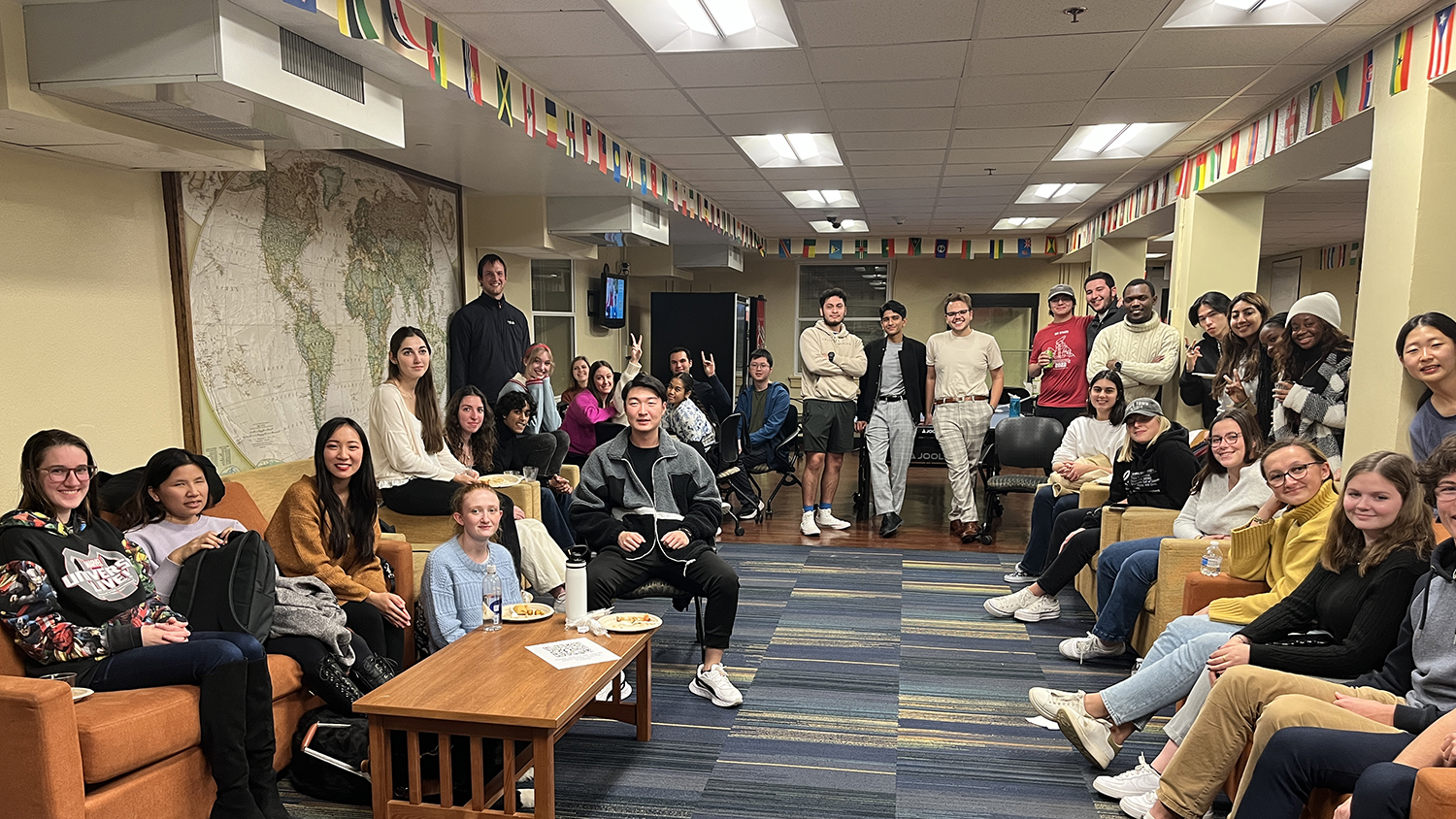
The Developing Cultural Competence student certificate program is a 4-week virtual exchange experience offered by NC State’s Global Training Initiative. Students from NC State join peers from partner institutions around the world for facilitated discussions, independent learning, and a collaborative project that all center on building the awareness, knowledge, and skills needed to work effectively across cultures. This past year, there were 306 students who completed the certificate and 27 nationalities represented in all the cohorts.
During the 2025–2026 academic year, the College of Humanities and Social Sciences (CHASS) sponsored 136 students to participate in this high-impact experiential learning program. In just ten hours over four weeks, participants move from exploring their own cultural identities to identifying cultural gaps, researching cultural dimensions, and applying cross-cultural skills to real world scenarios.


From Participant to Leader: Kayla Williamson’s High-Impact Journey
For most students, completing the DCC certificate is a finish line. But for Kayla Williamson, it was a starting point. Williamson is a sophomore double majoring in political science and international studies and is the first Cultural Exchange Facilitator hired as part of the Packways High-Impact Experience initiative. As a Cultural Exchange Facilitator, Kayla received training in teaching and learning, co-led sessions with GTI’s professional facilitators, and completed regular reflections on how cultural competence develops both in participants and in herself.


What made you want to become a facilitator after completing DCC?
“After I completed the DCC, I knew I wanted to continue to learn more about other cultures and continue to develop my cultural competence. Since I’m hoping to work internationally, or at least work with people from around the world, I want to be as prepared as possible.”
What skill grew the most through this experience?
“The skill I developed the most over this experience was my communication. Making sure that all the facilitators and I were on the same page about everything — when and what to present, for example — was super important, of course, but this applied to my interactions with participants as well. I was most nervous to lead small groups during the presentation sessions, but making sure everything was clear and there were no unanswered questions helped it go smoothly. It was also always helpful to remember that it’s alright to not have all the answers.”
What challenged you?
“I’m the type of person who wants to jump right into something, sometimes without pausing to make sure that will actually work. This mindset led me to offer to present sections that were a bit more complex, where I likely would’ve needed to field participant questions. However, this wouldn’t have been in the best interest of me or the participants. Luckily, the facilitators very kindly suggested other sections that may be a bit easier for me to handle, and I was able to share them confidently.”
How does this connect to your future?
“Both the DCC and the Cultural Exchange Facilitator role have helped prepare me to work with people from other cultures. The DCC taught me the principles, and the CEF helped me put it into practice. Having already gotten some experience in this area will help me hit the ground running wherever my career takes me.”
Williamson’s path from student to program participant to first-ever Cultural Exchange Facilitator is a great example of what happens when campus units partner to invest in global learning. The GTI is proud to collaborate with the College of Humanities and Social Sciences, whose generous sponsorship empowers both undergraduate and graduate students to bridge cultural divides.
CHASS joins a dedicated group of campus sponsors, including the College of Engineering, College of Natural Resources, College of Sciences, and College of Education, who are committed to providing high-impact experiences that prepare every member of the Wolfpack to Think and Do on a global scale.

- Categories: